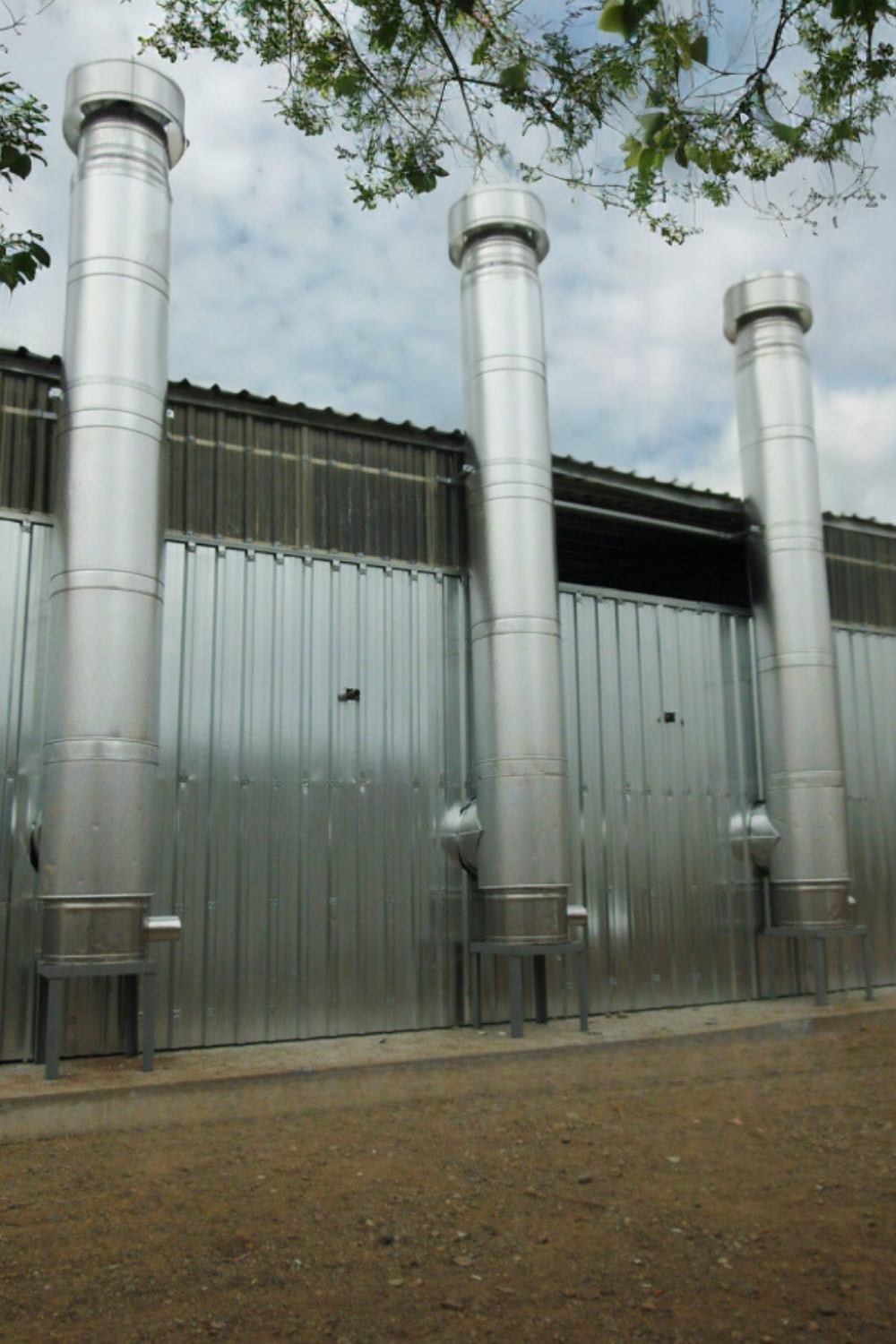
Chimneys
Product Information
1.Ensuring Optimal Combustion and Draft (Efficiency)
A properly designed chimney is essential for maintaining the negative pressure (draft) required for high-efficiency burners to operate correctly.
- Stable Draft: The chimney's height, diameter, and insulation are calculated based on the specific boiler/burner capacity, the flue gas temperature, and the local altitude/climate. This ensures a consistent and reliable draft, which provides the necessary oxygen for complete, stable combustion.
- Preventing Efficiency Loss: If the draft is too low, the burner will struggle, leading to incomplete combustion, wasted fuel, and the buildup of soot CO and unburned hydrocarbons) on heat exchangers, which dramatically reduces the boiler's thermal efficiency. Conversely, excessive draft can suck too much heat out, wasting energy. Timfog's sizing mitigates these stack losses.
2.Flue Gas Management for CO2 Enrichment
For natural gas-fired systems, the chimney is part of a complex circuit that enables a major greenhouse benefit: CO2 fertilization.
- Clean Gas Source: Timfog's chimneys are used in conjunction with low NOX burners (like Thermeta) that produce flue gas with minimal contaminants (NOX and CO2.)
- Exhaust or Injection: The flue gas is diverted before the final discharge point through an economizer or condenser to recover residual heat (increasing total system efficiency to over %982 The cooled, CO2-rich gas is then either safely vented through the chimney or diverted by a dedicated blower into the greenhouse for CO2 dosing to boost photosynthesis.5 The chimney serves as the safe exhaust path for gases not needed for CO2 enrichment.
3.Material Specification and Durability (Longevity)
Greenhouse environments present extreme corrosive challenges that require specialized chimney materials.
- Condensate Resistance: High-efficiency boilers, especially those with economizers, cool the flue gases down to dew point temperatures (often below 600) causing acidic condensation (e.g., sulfuric acid from trace sulfur in the fuel).
- Stainless Steel Construction: Timfog employs double-walled, insulated stainless steel systems (often high-grade alloys like SS 316L) to resist this internal acidic corrosion. The insulation maintains the internal flue gas temperature to minimize condensation while protecting the outer structure.
- Sealing and Airtightness: The use of precision-engineered, often flanged, sealed joints prevents the acidic condensate from leaking onto the exterior or roof structure, ensuring long-term structural integrity and safety.
4.Compliance and Safety
The chimney is the last line of defense for safely discharging combustion byproducts away from the crop and personnel.
- Stack Height Calculation: The effective stack height is calculated to ensure the plume disperses safely into the atmosphere, meeting local environmental regulations and preventing down-drafts that could contaminate the greenhouse's fresh air intake or cause pollution injury to the plants.
- Thermal Barrier: The double-wall insulation protects the greenhouse roof material and structure from excessive heat, preventing fire hazards and heat-related degradation of the building envelope.